
Direct Mail
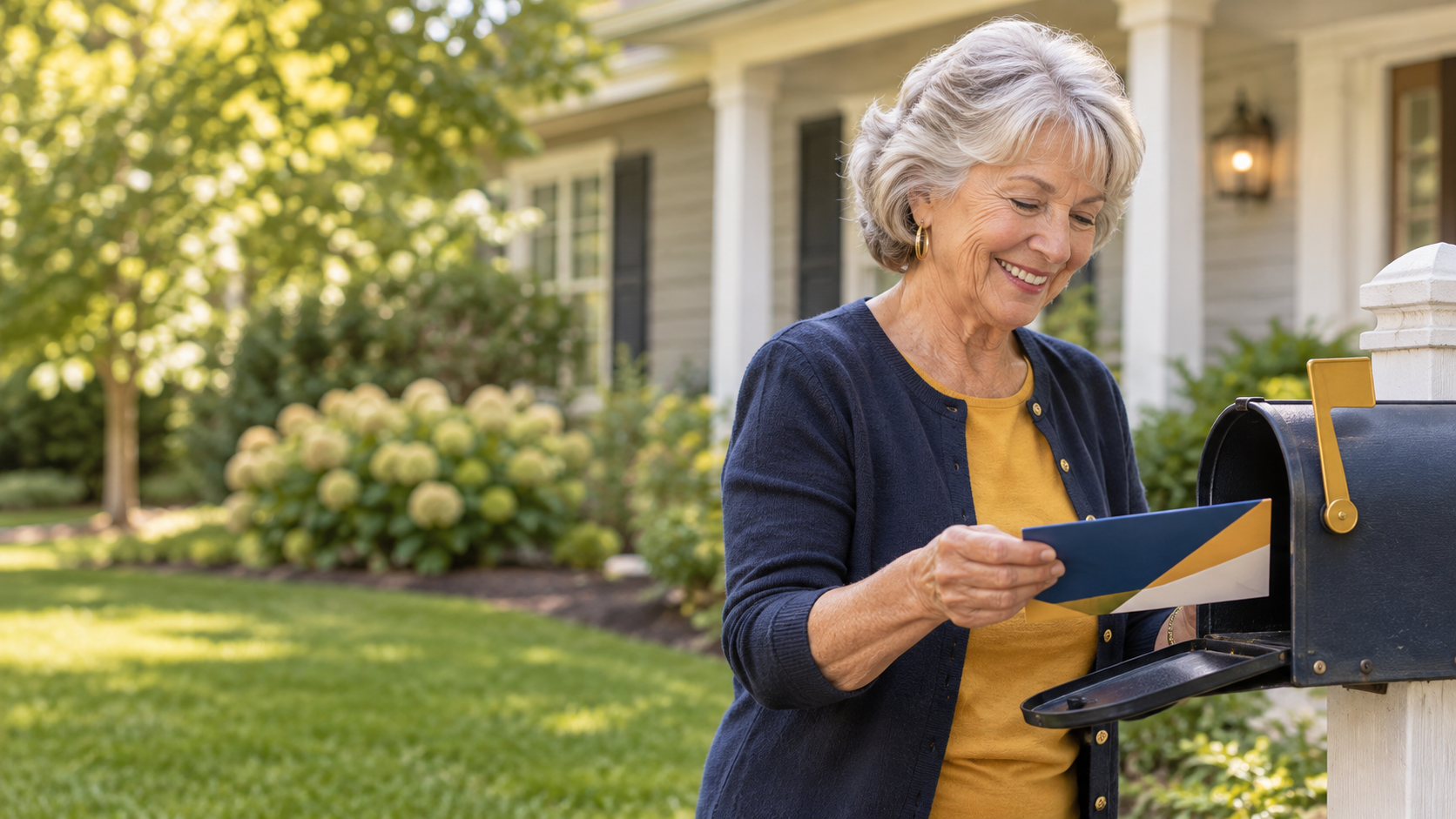

Yes, direct mail still works for senior living, and it may be the most overlooked channel in the industry. Mailboxes are quieter than they've been in years, families read their mail at home on their own timeline, and a well-targeted piece reaches the household before a sales director ever makes a case. It works best when the list is built for senior living and mail and digital run together.
Written by Donnie Funderud, SenioROI VP of Sales and Marketing
Key takeaways
Everyone put their eggs in the digital basket. Meanwhile, the mailbox became the least crowded, most overlooked channel in senior living. Here's what 20 years of campaigns actually show.
I hear the same objections every time I bring up direct mail with a senior living marketing director. We have a local printer we've used for years. It's too expensive. And we don't know how well it's actually working.
I understand all three. And I'm going to tell you why all three are quietly working against you.
After 20 years of building campaigns for senior living communities, here's what I've observed. The communities pulling ahead on occupancy right now are not the ones that went all-in on digital. They're the ones who figured out how to make direct mail and digital work together. And the ones who abandoned mail entirely are paying for it in ways that don't always show up where they're looking.
When someone tells me they have a local printer they've used for years, I don't doubt the relationship is comfortable or that the printer does good work. What I do know is that a local print shop is not thinking about senior living.
They're not considering who the actual decision-maker is. They're not thinking about how to segment a list between adult children in their 50s and homeowners in their late 70s who live alone. They're not thinking about care transition indicators, household financial profiles or which feeder markets your best prospects come from.
They're thinking about getting a file to press on time. That's their job. The strategy is supposed to come before they ever see the artwork.
A local printer can produce a beautiful piece. But if the list behind it wasn't built by someone who understands this category, you're mailing a beautiful piece to the wrong people. And you'll never know it.
The second objection, that direct mail costs too much and you can't tell if it's working, is the one I take most seriously, because it's partially fair.
Direct mail does cost more per piece than a digital impression. And attribution is genuinely harder. You can't just check a dashboard and see a direct line from a mail piece to a move-in the way you can with a paid search click.
But consider this. What does it cost you when your digital campaigns reach people who look like your buyer on paper but don't have the financial profile to move in? What does it cost when you're nurturing digital leads that were never qualified to begin with? The cost of a poorly targeted campaign doesn't show up as a line item. It shows up as lots of inquiries and few tours: a lot of activity and not enough results.
On attribution, there are ways to close the loop: trackable phone numbers, unique URLs and matchback analysis that connects your mailing list to new leads and depositors. The tools exist. Most communities just haven't been shown how to use them.
The cost of direct mail isn't the invoice. It's everything downstream that depends on the list being right and the strategy being built for this category.
Before we talk about the channel, let's talk about the audience, because a lot of senior living marketing is built around the wrong picture of who's in the decision seat.
The prospective resident is often between 78 and 85. They may be experiencing cognitive or physical decline, and they frequently aren't the ones driving the research. It's their adult daughter, typically in her late 40s to mid-60s, managing a job, her own household and the emotional weight of watching a parent need more support than she can provide.
Here's something worth sitting with. Research on senior living purchase decisions shows that sales directors rank last in the trust hierarchy for families going through this process. Last. Behind resident families, current residents, executive directors and wellness staff.
That's not an indictment of sales teams. It's how high-stakes, emotional decisions get made. Families don't want to feel sold. They want to feel informed and confident before they talk to anyone.
Physical mail reaches a family in their home, on their timeline, before a sales director ever has to make a case. That's not just a channel advantage. It's a trust window, and digital advertising doesn't create it.
That adult daughter may be digitally active. But her inbox is chaos and her feed is noise. When she sits down at the kitchen table on a Sunday evening to think through what comes next for her father, a piece of mail that speaks to her situation carries a different kind of weight than a retargeted banner ad she scrolled past.
The average American sees thousands of digital advertising impressions a day, across every screen and platform. Attention to any single impression has been compressed to milliseconds. We all have ad blockers. We all have skip buttons.
The average home gets three to eight pieces of mail per day. Not per hour. Per day. And each piece is physically handled. Whether it goes from the mailbox to the counter or straight to the trash, it gets looked at every time.
The USPS Household Diary Study found that 98% of Americans retrieve their mail the day it's delivered, and 77% sort through it immediately. That's active engagement no digital platform can guarantee. Comparing mail and digital on cost per impression misses the point entirely.
A postcard on a refrigerator keeps generating impressions for days or weeks at no extra cost. A mail piece on the kitchen counter gets seen by several family members. I've had clients get calls from prospects months, sometimes years, after a mailing went out, because the person held onto it until they needed it.
Research from Canada Post, conducted with a neuromarketing firm, found that physical mail took 21% less cognitive effort to process than digital mail and produced 70% higher recall. In a category where the decision unfolds over months and involves several people, memory and trust aren't soft metrics. They're the whole game.
There's also a trust signal built into mailing itself. When a community invests in printing and mailing a piece to a household, it has made a tangible commitment. People recognize that, even if they can't put it into words. It doesn't feel like an algorithm decided to show them an ad. It feels like a community chose to reach out.
No, and this is where either-or thinking does real damage. Direct mail puts you on a family's radar and makes the first impression. Digital keeps you there. Together they create a sequence of touchpoints no single channel produces alone.
Think about it from the family's side. They discover your community through the mail. They visit your website. Retargeting keeps your name in front of them. Your sales counselor calls. By then they've experienced your community across several channels, and the sales director isn't starting from scratch. Pull any piece out and the whole system gets weaker.
Meanwhile, ad blockers, phone privacy settings and the decline of third-party cookies have made digital targeting less precise and more expensive. Mail reaches every addressed household with no ad blocker and no auction driving up the price. That channel is getting more valuable as digital gets more complicated, not less.
Cypress Cove is a Life Plan Community in Fort Myers, Florida. When they came to us, they had two challenges at once: they were expanding villa inventory from 10 to 24 units, and one-bedroom units on the legacy campus weren't moving as quickly as they needed.
They also had a list problem they didn't know about yet. Their purchased list came from a local vendor. It wasn't built around who Cypress Cove's buyer actually was, and it wasn't detailed enough to avoid unqualified prospects. They were spending money to reach people who were never going to move in.
The challenge: sell a new expansion, increase occupancy on the legacy campus, run an omnichannel campaign and control marketing costs, all at the same time.
We started with a Cleanse, Append and Profile of the Cypress Cove CRM. That cleaned up bad addresses, added key demographics and built a profile of their most promising leads. Based on that profile, we delivered a targeted list with 40% more qualified prospects than their previous vendor had.
The campaign ran across direct mail, online retargeting and display, targeted social media, and SEO and paid search. Monthly matchback analysis connected the mailing list to new leads and depositors, so the team could see exactly what the list was producing and adjust as they went.
"The team at SenioROI has been instrumental in our success. We sold out our expansion in record time. It was so successful that we have decided to do another."
Mike Moss, MAML, CSE, VP Sales & Marketing, Cypress Cove
That result didn't come from digital alone. It came from the right list, run through the right channels, with a matchback process that let us prove what was working and fix what wasn't. Direct mail carried a lot of the weight. It reached qualified households first and put Cypress Cove on their radar. Everything else built from there.
Mailboxes are quieter than they've been in 20 years. Communities that cut direct mail because it felt expensive or hard to measure left an opening. Their prospects are going to the mailbox and not finding them there. Over a year, that's a meaningful difference in first impressions.
The data to do this well has also never been better. Senior Cleanse, our proprietary address validation process, removes bad and undeliverable addresses before a campaign goes to print, and we re-cleanse every time we mail. Address data for people 65 and older decays faster than for any other age group. People move, transition into care or leave the market. A list that was clean six months ago has already degraded. Mailing stale data is one of the quietest ways communities burn their budget.
I've watched communities convinced direct mail didn't work for them run it right for the first time and see everything change. The channel works. The question is whether the strategy behind it is built for senior living or just assembled by whoever handles the printing.
Yes. Families read their mail at home, mailboxes are less crowded than digital feeds, and targeted mail reaches households that can afford to move in before they ever talk to sales.
Use trackable phone numbers, unique URLs or QR codes, and matchback analysis that compares your mailing list with new leads, tours and depositors.
Both. Mail makes the first impression with the households you choose, and digital keeps your community in front of them while they research.
From list to delivery, we'll look at your data, your creative and targeting, and what a properly built direct mail program would look like for your market. If your mail has stopped producing results, or you've never run it with a senior-living-specific strategy, this is where to start.